
AI is revolutionizing software development and marketing, with tools like Replit enhancing code development and AI-driven project estimation improving accuracy. David Hirschfeld emphasizes adopting a “clinician mindset” to test assumptions and refine product-market fit. In marketing, AI helps analyze customer data, personalize outreach, and optimize messaging. The healthcare sector is leveraging AI for virtual nurses, medical record analysis, and patient monitoring. Looking ahead, AI-driven personalization will reshape customer engagement.
AI in Software Development and Marketing
Key Points:
- Development Tools: AI tools like Replit help streamline code development by automating tasks.
- Startup Strategy: Startups should adopt a “clinician mindset” to refine product-market fit and personalise marketing.
- Healthcare: An “AI nurse” uses wearables to improve patient care, while AI analyses medical records for performance assessment.
- Marketing Personalisation: AI will increasingly tailor marketing messages based on customer online behaviour.
AI’s Impact on Software Development: Current Tools and Future Predictions
Due to its AI-driven code development features, David favors Replit for building prototypes and software solutions. He recognizes that AI can’t fully replace developers yet, but expects significant improvements in these tools as they evolve. He uses a surfing metaphor to show how AI transforms the professional landscape, stating that individuals must “paddle out hard” to keep up with the significant changes AI brings. AI is now used in code editors to assess, refine, and spot code vulnerabilities and automate documentation and project planning. His company is also developing an AI model to improve the accuracy and speed of project estimations.
AI-Driven Marketing Strategies for Startups
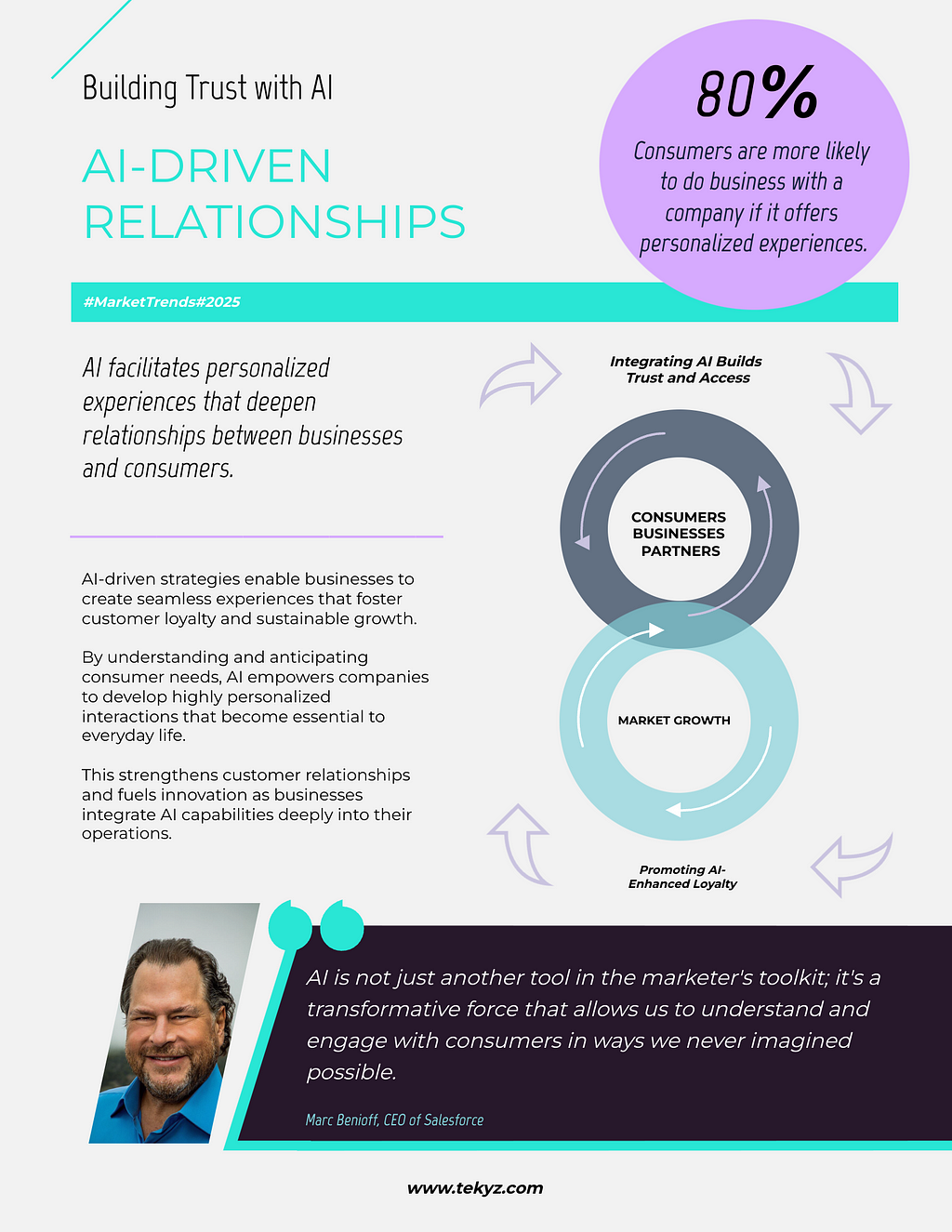
The discussion shifts to how marketers can leverage AI in product development, particularly for startups. David highlights that startups should adopt a “clinician mindset” to test their product assumptions and target market effectively. He states that AI can significantly enhance identifying the ideal customer profile by analyzing niches, scoring issues, and creating launch plans. AI helps startups gather information, extract insights, and formulate initial ideas about various niches, enabling them to refine their messaging and develop more effective MVPs. The goal is to create marketing outreach that feels personalized and relevant to each customer.
Innovative AI Applications in Healthcare
David shares examples of how his company implements AI in customer projects, particularly in the healthcare sector. An example is an “AI nurse” that monitors patients’ wearable devices and reaches out to them when it detects unusual conditions. This AI nurse can engage in natural conversations, access medical history, schedule appointments, and even escalate emergencies. Another project aims to use AI to analyze medical records and evaluate healthcare professionals’ performance, offering insights into efficiency, risk assessment, and patient care quality. These examples highlight the potential of AI to improve healthcare delivery and patient outcomes.
Personalization and the Future of AI Marketing
The conversation concludes with a discussion on the potential of AI to personalize marketing touchpoints. David imagines a future where AI analyzes a potential customer’s online presence to create personalized marketing messages that address their needs and challenges. He also suggests the possibility of AI-powered voice assistants that can engage in sensitive and appropriate customer conversations.
The discussion underscores the transformative potential of AI in both software development and marketing. AI is transforming how businesses function and engage with customers through tools for code development, personalized marketing, and innovative healthcare applications. Professionals must embrace AI, update their skills to stay competitive, and take advantage of its opportunities.
[0:08–0:16] AI Voice: Welcome to AI Marketing, a podcast for sales and marketing professionals that want to increase their sales, leads, and conversions through the use of artificial intelligence solutions. And now, here’s your host, Mark Ferdinand.
[0:20–0:29] Mark Fidelman: Wait until you see today’s episode, or should I say listen to today’s episode. We have a very special guest.
[0:29–0:40] Mark Fidelman: His name is David Hirschfeld. We’re going to talk about AI in software development. Obviously, we’ll have quite a few marketing angles there. My name is Mark Fidelman.
[0:40–0:47] Mark Fidelman: I’m your host of the AI Marketing Podcast. So let’s jump into this. David, could you briefly introduce yourself?
[0:48–0:59] David Hirschfeld: Yeah, hi, and thanks, Mark, for having me on your show. I’m David Hirschfeld. I’ve been a software developer and a startup entrepreneur for over 35 years.
[1:01–1:24] David Hirschfeld: And launching a software startup or scaling a software startup, you know, marketing is such a critical piece to that. And there’s a big difference, in my mind, marketing when you’re at the nascent trying to figure out how you’re going to launch a product versus you’re now figured out product market fit and who your ideal customer profile is, and now you’re scaling it.
[1:24–1:34] David Hirschfeld: So that’s, you know, we build software. That’s what we do. And marketing is a big part of what we do. So that’s who I am.
[1:34–1:45] Mark Fidelman: All right. Well, you know, I ask everybody this question, David. I’ll give you a little bit of prep on it, but tell us what your favorite AI tool is currently and why.
[1:46–1:58] David Hirschfeld: Okay. So I’m using a tool called Replit for building prototypes and some point solution software stuff.
[1:58–2:10] David Hirschfeld: It is a 100% AI-driven code development tool. I almost am reluctant to talk about it because I don’t want to replace myself, not yet, or my team.
[2:12–2:23] David Hirschfeld: And it’s not good enough to do that yet. It’s actually still a ways from there, but it’s good enough to actually build stuff where three months ago, four months ago, nothing was good enough to do that at all.
[2:23–2:36] David Hirschfeld: It just shows how fast things are evolving. And with the new release coming out of O3, I’m expecting an order of magnitude improvement on a lot of these things.
[2:36–2:48] David Hirschfeld: So right now, that’s my favorite AI tool. I use so many AI tools. It’s hard to say what my favorite is. It depends on what I’m trying to accomplish at any one time, right?
[2:48–2:49] David Hirschfeld: Well, yeah.
[2:49–3:02] Mark Fidelman: I mean, I’ve got like 10, but, you know, I always have a favorite that I’m using currently at the time. So it’s good to hear about that one. And I’m sure a lot of marketers could find that useful if they’re prototyping.
[3:02–3:05] Mark Fidelman: Is it a prototyping tool? Is that what I understand it to be?
[3:05–3:13] David Hirschfeld: It’s actually a — you can build production applications to a limited degree with it. That’s what it’s for, is for generating code.
[3:13–3:13] Mark Fidelman: It’s off for, right?
[3:14–3:17] David Hirschfeld: Yeah, screens and database and functionality, the whole thing.
[3:18–3:33] Mark Fidelman: Wow, wow. You know it’s only a matter of time before you’re doing and the AI marketing is doing what I’m doing. But I just think these are just new tools that we could use to do even more crazy, innovative, exceptional things for people.
[3:33–3:44] David Hirschfeld: Right. They actually, you know, they create as much opportunity as anything else, right? As long as you’re flexible and willing to — so I kind of think of it like this.
[3:44–3:59] David Hirschfeld: I live in the San Diego area, so I always use the surfing metaphor, right? You know, if you’re a beginner, you’re learning how to stand up on a board. When you become competent, then you’re consistently in the three- and five-foot waves.
[3:59–4:13] David Hirschfeld: If you’re really exceptional at what you do, you’re surfing the 10-foot, really thick, fast waves, right? And that’s where a really exceptional team, marketing, development, whatever, that’s kind of what they’re doing.
[4:13–4:27] David Hirschfeld: They’re standing on their boards, getting in the curl on these really big, scary waves. Well, there’s this 100-foot wave coming at all of us right now. You can see it out there. You know, you’re already starting to feel it lift your board up, and you’ve got one of two choices.
[4:27–4:42] David Hirschfeld: You either have to paddle out into it, get up and stand up in the wave, and get on the very tip of your board and try to stay ahead of that crest. So you see this. There’s a 100-foot wave, and it’s coming at us, and nobody’s going to be able to slow this down.
[4:42–5:05] David Hirschfeld: It’s just going to keep picking up speed as it gets closer. So you have one of two choices. You either sit there and wait for it to come, and it’s just going to wipe you away, as any 100-foot wave would do, or you paddle out really hard, paddle out to it, get up and stand up on your board in this wave, and get on the very tip of your board and just try to stay ahead of the crest of this wave.
[5:06–5:13] David Hirschfeld: That’s how I see this change in everybody’s work and professional life because of AI.
[5:13–5:34] Mark Fidelman: Okay. All right. Well, let’s jump into the main part of our program, which is talking about AI and software developments. So tell us, we’ve heard about this tool that you just mentioned, but let’s now bring it into full focus in terms of your overall approach using AI in software development.
[5:34–5:40] Mark Fidelman: Where are we today? And then as a follow-up, where is this headed? What’s it going to look like in two years?
[5:40–6:01] David Hirschfeld: Two years Oh God You know I don have I not I have to put on my wizard hat and a crystal ball for two years I didn used to have to do that I used to be able to predict it pretty solidly until a few years ago Yeah it going fast Yeah, it’s happening really fast.
[6:01–6:12] David Hirschfeld: I do have some future predictions. We can talk about that later. But right now, we’re using it and it’s integrated into our code editors.
[6:12–6:29] David Hirschfeld: It helps us evaluate the code that we’ve written, helps us refactor that code, which is a fancy way of saying rewrite it to make it more efficient. It helps identify vulnerabilities in our code to prevent hacking.
[6:29–6:39] David Hirschfeld: And we do this in our code a lot, right? We write a lot of documentation now using AI and organize our planning with AI. There’s just a lot.
[6:39–6:55] David Hirschfeld: It’s coming into a lot of different aspects of our workflow. For us, one of the things that we do really well is how we estimate projects, and we’re building an AI model for that.
[6:55–7:10] David Hirschfeld: So that will actually even improve on how we estimate projects and also make the estimations happen a lot faster and more accurately. So that’s an example of some of the things that AI is impacting us right now.
[7:12–7:31] Mark Fidelman: Wow. Okay. So, but how are you or how would marketers be using AI in product development? Let’s say they’re a product marketing manager and they’re putting the specifications and they want to build, you know, an application that solves their customers’ problems.
[7:32–7:36] Mark Fidelman: Walk us through how a startup would do that with your approach.
[7:37–7:52] David Hirschfeld: Okay. So the hardest thing, give a little context, the hardest thing for startups to do, well, the hardest thing for them to do is to get into a manager mindset or a clinician mindset.
[7:52–8:13] David Hirschfeld: You know, startups are startups usually because somebody has a vision and they believe in their vision. And so — but the startups that are really successful are successful at basically removing that black robe and that belief in their product and putting on a white coat and being clinicians and testing every assumption they have.
[8:14–8:48] David Hirschfeld: So one of the things that — so every founder, their first job when they’re starting — when they’re planning a product or planning to put a product in the market is to figure out, out of all the various niches that they might be able to market that product to and all of the problem statements that that product solves, which niche has the top one or two problems that have the highest perceived impact from the stakeholders that are going to buy that product and independently have the highest cost because of that impact.
[8:49–9:04] David Hirschfeld: And figuring out who that is, there’s ways of doing it. It’s a very tedious process. Marketing companies historically are not as good at that as they are at once you understand who your ideal customer profile is and then a building on top of that.
[9:05–9:35] David Hirschfeld: So doing that initial analytic work is really hard to do. It requires being in front of a lot of customers and consolidating and distilling out a lot of information from a lot of different sources and doing interviews to continually test your assumptions, not like a formal discovery interview process, but a continual iterative interview process focusing on who you’re speaking with in terms of what niche they’re in and if they’re a stakeholder in that niche,
[9:35–10:10] David Hirschfeld: what position perspective do they come from because it’s going to be different in different niches, even for the same product. So AI is a huge value force multiplier here because with AI, it can help you figure out what that basically put together a whole planning regimen for you in terms of how to attack this, collect a lot of information and find sources for you, distill that information, and produce some initial assumptions for you in terms of the various different niches
[10:10–10:20] David Hirschfeld: and scoring these different problems in terms of which ones are higher for which niches to determine where you should go. That’s the first thing.
[10:20–10:30] David Hirschfeld: Then once you figure out who that early adopter niche is and who the stakeholder is and what the sales cycle is and the market size and all that, AI can help you put together a launch plan.
[10:32–10:43] David Hirschfeld: In fact, I just saw a video from a marketing product manager that went through a whole AI workflow doing exactly what I just talked about, and it was really impressive.
[10:43–10:46] Mark Fidelman: Could you send me that link, and we’ll put it in the show notes?
[10:47–10:50] David Hirschfeld: Yeah, if you remind me, send me an email afterwards to remind me.
[10:50–10:51] Mark Fidelman: Yeah, I will.
[10:51–10:59] David Hirschfeld: Because by the time we finish this discussion, and we’ll have probably talked about half a dozen other things and I’ll forget. All right. Yeah.
[11:00–11:18] Mark Fidelman: Okay. Absolutely. Yeah, so you’re using AI not just to create the applications but to build in some sort of a marketing launch plan and to go and look at your target audience and what they’re saying and what they’re talking about so that you build a better product or MVP up front, it sounds like.
[11:19–11:39] David Hirschfeld: Oh, yeah. Well, the idea is whether the MVP is better or not, It’s going to sell better because it’s so much better targeted. The messaging is better. The idea, you know, who to speak to, how to speak to them in a way that they lean forward because they recognize you understand what they’re struggling with and you have a way to fix it.
[11:40–12:03] David Hirschfeld: And, yes, it’s just better in so many ways. The actual product we building may or may not be better hopefully it better but definitely we can get it done faster than we could previously and we can validate the quality with less effort than we did previously But we still have a lot to do a lot of the hard work.
[12:03–12:19] David Hirschfeld: It’s not automating all of that yet, but it really makes a big difference in the analysis and planning and organizing stage of things, both in development and marketing, you know, every part of that launch lifecycle.
[12:20–12:20] David Hirschfeld: Okay.
[12:20–12:43] Mark Fidelman: And so when you’re building this software application, you’re using AI, you’re using it in a traditional way for sure. Is there any kind of AI applications that you’re embedding into the software that you’re creating in order to infuse AI into the software development of the platform or application that you’re creating.
[12:43–12:45] Mark Fidelman: Again, I’m not a programmer. Right.
[12:46–12:57] David Hirschfeld: So are you asking from how we’re using it in terms of accelerating the programming or are you asking it in terms of using, implementing AI in our customer projects?
[12:57–13:14] Mark Fidelman: Yeah, because implementing AI is part of their customer application. Let’s just say you’re building eBay today. You know, you infuse it with AI either to create better bidding strategies or to help people find things better or, you know, whatever it is.
[13:14–13:16] Mark Fidelman: Is that something that you’re doing as well?
[13:17–13:20] David Hirschfeld: Every single project we’re involved with, yeah.
[13:20–13:26] Mark Fidelman: And what are the more innovative ones that you’ve seen without revealing their names unless you’re able to?
[13:26–13:43] David Hirschfeld: One of our clients is in health care, and their focus is to bring health care support to vulnerable populations, like people on Medicaid and indigent people and things like that.
[13:43–13:54] David Hirschfeld: And one way they’re doing that is by creating an AI nurse that can call the patient. They can monitor their wearable devices like a watch.
[13:54–14:09] David Hirschfeld: Wow. And then when there’s any kind of outlier conditions, call the patient to check in with them to say, hey, I noticed your heart. And it’s like talking to a real nurse. It’s not like talking to, you know, you can interrupt them and they say, I’m sorry, what were you saying?
[14:10–14:15] David Hirschfeld: Oh, you’re right. And it’s literally a conversation. So that’s an example.
[14:15–14:21] Mark Fidelman: Is it anything like ChatGPT voice? I mean, that thing is pretty incredible.
[14:21–14:47] David Hirschfeld: Yeah, it’s very much like that, except that this nurse knows your medical history and knows everything about health care, you know, related to you. So and can schedule appointments with your doctor and can connect you, that person, with somebody in an emergency situation or determine, you know, triage that this is something that needs to be escalated immediately.
[14:49–14:59] David Hirschfeld: That’s one use case for this nurse. There’s so many. That client just raised $5 million, as you can imagine. They’re on a rocket ship right now.
[14:59–15:13] Mark Fidelman: Well, I love that approach, especially the monitoring, you know, whether it’s your watch or your ring or whatever it is that you have. And I’m hoping more of these inputs are introduced into the home and on the individual as much as possible.
[15:14–15:29] David Hirschfeld: Yeah, me too. How nice would that be if you’re going to see a doctor for the first time and you just tap on the app and you say, Claire, would you please send my new doctor my medical history?
[15:29–15:32] David Hirschfeld: And she says, sure. What’s his fax number?
[15:33–15:39] Mark Fidelman: Yeah, well, hopefully you’re not using faxes, but how about they just know it already? How about they just know it already because it’s there?
[15:39–15:50] David Hirschfeld: The reason I said that is because I was connecting with a new doctor who we need to get my medical records to this doctor, and they said, make sure to give them our fax number.
[15:50–15:55] David Hirschfeld: This was just this week. I said, pardon me, facts. Did you really say facts?
[15:55–16:04] Mark Fidelman: And that’s the only reason I said facts. I don’t think I’d be using that, doctor. That’s just me. I mean, what other tools are that antiquated?
[16:06–16:26] David Hirschfeld: It’s weird. You know, when it comes to health care professionals, people with a lot of experience have certain intuition about your health condition, if they’re really good, which you don’t have when you’re only 10 years experience, but you develop it over another 20 or 30, even though they still think fax is the way to get the medical records.
[16:26–16:36] David Hirschfeld: They can walk in the room, look at you, you know, they get a scent of something, and they can see a certain color on your skin, and they immediately blink.
[16:36–16:40] David Hirschfeld: They know something needs to be addressed that you might not have known yourself.
[16:40–16:57] Mark Fidelman: I think that is very true. I’d also say that the older these professionals get, according to my research, and what I’ve seen is the more they get lazy and they’re not doing as much for you that they should, whether it’s follow-up or, you know, really taking the time to understand what you have in a more –
[16:57–17:02] David Hirschfeld: Yeah, there’s definitely that. There’s no question. But not with everybody, right?
[17:02–17:10] Mark Fidelman: But that makes the case for AI because if you have an AI helping that doctor, they could be incredibly effective.
[17:10–17:23] David Hirschfeld: Oh, that’s another AI project. And it happens to also be in health care with a client where they basically do reviews of medical records from health care organizations.
[17:24–17:56] David Hirschfeld: So, you know, a doctor has their progress notes with all their patients. And so they’ll take a random sample of those, you know, the medical history of the various patients from that doctor, And then they use AI to then do an initial review of how that doctor has assessed that patient health over a period of time and then grades it on various different factors scores it in terms of efficiency and risk assessment
[17:56–18:19] David Hirschfeld: and efficacy from a patient care perspective and things like that, and then sends it to an actual doctor who is virtually available, but it’s a real doctor who then reviews the initial review, reviews the summary of all of these records, which is also an AI activity, and then does their own independent scoring.
[18:19–18:30] David Hirschfeld: So that’s — and with the idea that these healthcare organizations need to know how well their healthcare professionals are effectively treating patients.
[18:30–18:41] David Hirschfeld: It’s not always obvious just from looking at how things are being built. But it’s very obvious if you read all these notes, and the medical history of one patient might be 70 pages.
[18:41–18:48] David Hirschfeld: So it’s a daunting task if you don’t have something like AI to be able to absorb all that information and make sense of it.
[18:49–19:03] Mark Fidelman: Yeah, I mean, in my case, I’ve been to so many different types of doctors and institutions that there’s no way they’re looking at all of that in aggregate. So hopefully the AI can pull all that information in from a variety of sources.
[19:03–19:06] Mark Fidelman: Because I’m not sure because of HIPAA laws they’re sharing that stuff, are they?
[19:07–19:32] David Hirschfeld: Well, they can share it with each other without — They know about each other. Right, exactly. So it’s still up to the patient to know who they’ve seen in the past so that they can have that healthcare professional get their medical history or to have a primary care doctor, even if that changes over time, that keeps track of their medical history from all the different doctors they’ve been to, right?
[19:32–19:44] David Hirschfeld: That’s what your primary care doctor should be doing if they’re good and if you’ve given them access to previous health care history. But it’s not a good — we don’t have a good system.
[19:44–19:53] David Hirschfeld: HIPAA was a big mistake the way they did HIPAA. So that’s a whole other podcast with this probably a host, right? All right.
[19:53–20:11] Mark Fidelman: Well, we have to wrap things up, but I want to go back to what you guys do and fill in some of the blanks specifically around AI or AI product marketing that you guys do and focus on that we all should know about as marketers.
[20:12–20:40] David Hirschfeld: Well, to me, the most exciting part of product marketing regarding in terms of what AI is doing is giving us the ability now to personalize every touchpoint with a prospective customer, right, even on mass marketing with the idea that everybody who’s in your target market has some kind of social footprint someplace.
[20:40–21:08] David Hirschfeld: You know, there’s some history that’s available somewhere about them that lets you learn enough about who they are and what they struggle with and what matters to them that as you’re marketing a product, you can create outreach touch points that make that person feel like you really know who they are, which, of course, causes them to then click on the thing and react to the thing because you’re speaking directly to them and you’re speaking to everybody individually.
[21:08–21:22] David Hirschfeld: You know that — did you have a teacher when you were in lower elementary or higher elementary that if they felt like they were — you were the only student because they really understood you and they were — everything they taught was focused on you?
[21:23–21:33] David Hirschfeld: Most people have had that kind of experience maybe once in some grade in their life. Yeah. AI has the ability to make all of your marketing outreach feel that way.
[21:34–21:36] David Hirschfeld: Yeah. To me, that’s really exciting.
[21:37–21:51] Mark Fidelman: I agree. I agree. Well, I really appreciate you being on the show and taking us in directions we normally don’t go, but it’s fascinating to me, especially on the health care side. So where can people reach you?
[21:51–22:10] David Hirschfeld: Yeah. Oh, and the final thing on that is imagine if you had AI marketing outreach that was a voice like this nurse, right? But it was really sensitive and appropriate and, you know, somebody you actually might want to talk to when you pick up the phone.
[22:10–22:22] David Hirschfeld: Anyway, they can reach. So let’s talk about me. Enough about me. Let’s talk about me. They can reach me at david at Tekyz.com. That’s my company is Tekyz.com.
[22:23–22:41] David Hirschfeld: Tekyz is spelled T-E-K-Y-Z. so you can reach me from my email or find me on LinkedIn David Hirschfeld I’m easy to find on LinkedIn or search for Tekyz on LinkedIn Mark I really appreciate it
[22:41–22:58] Mark Fidelman: I appreciate you being on the show and as a reminder please share this podcast with people that are interested in AI marketing specifically or in this case have a development project that they’re looking to develop using AI.
[22:58–23:17] Mark Fidelman: I’m sure it cuts down the cost and improves the sales. I could just see it knowing how advanced AI is becoming and will become. So with that, I appreciate you again and look forward to talking to you in the future about your next level of AI and software development.
[23:18–23:20] Mark Fidelman: So thanks again.
[23:20–23:21] David Hirschfeld: Thank you, Mark.
David Hirschfeld founded Tekyz, a company dedicated to transforming business software development. With over 30 years of experience, his journey began with a physics degree from UCLA and a successful sales career at Computer Associates. After launching and selling his first software company in 2000, David found his passion for empowering entrepreneurs.
He developed the Launch 1st™ methodology, which focuses on generating revenue before coding begins. This helps startups gain traction while minimizing risks. With a commitment to innovation and collaboration, David leads Tekyz in providing AI-powered development and SaaS solutions, making a meaningful impact in the tech world.
Tekyz is set to launch two new AI applications: one for automating the Launch 1st Methodology Niche Analysis and Estimiz, an AI-based project estimation tool. Outside of work, David enjoys golfing and woodworking.
You can learn more about David Hirschfeld and Tekyz by following his LinkedIn profile — David Hirschfeld’s LinkedIn Profile.
For more information about Tekyz’s services and how they can help you harness the power of AI in healthcare, visit tekyz.com or contact the founder directly at [email protected].
Exploring AI in Software Development and Marketing was originally published in Tekyz Blog on Medium, where people are continuing the conversation by highlighting and responding to this story.